Wednesday, February 6, 2013

Disney’s Got Your New Star Wars Right Here, Pal


Joss Whedon suddenly got too expensive, I know. But still, Disney, did you try calling him first?

Since Abrams approached my beloved Star Trek like a bored trust-funder throwing together an English Comp paper the night before it’s due, I don’t have much enthusiasm for Abram’s new franchise conquest

But, maybe it won't be too bad. Everyone loves a time travel deus ex machina, amirite?

Monday, February 4, 2013

The Battle to save Independent Cinema Moves to Kickstarter

Much like our own beloved IFS, many historic theaters and film programs around the country are struggling with the expensive addition of digital projection (as more and more studio offerings become unavailable any other way).

No Film School has an excellent post about an independent theater in Cambridge, Massachusetts that has taken to Kickstarter to raise funds for a digital conversion and HVAC system.

Watch their Kickstarter video and read about it here.

Wednesday, January 30, 2013

The Dark Side of Film Festivals


Last week I blathered on about How Cool Film Festivals Are. Don’t get me wrong--I’ve had a lot of fun at film festivals over the years. In the spirit of full disclosure, you should know that they have a seamy underbelly. And it's not a cool, film noir kind of underbelly.

Expensive, and getting more so every year

The prices of festival passes get more outrageous every year. When I started going to the Telluride Film Festival in the early 2000s, a regular pass was something on the order of $580. This year that same pass is $780—an increase of 35%.

Telluride used to sell a Late Show Pass, good for the last film of the day at two different theaters, every night of the festival, for 20 bucks. This was a generous deal for people without the regular pass.

This year that same pass is $60.

Q&As aren’t really

Major film festivals often offer Q&A sessions with a film’s stars and/or filmmakers after the screening. A decade ago this was often a true Q&A session, opened up to anyone in the audience.

This still happens, but it’s growing rarer, especially with big stars and directors. Now it’s more likely that a moderator will ask the Bigwig du jour questions, and the audience will sit passively through the tightly-scripted, boring, ass-kissing exercise. No tough, possibly embarrassing questions from real people! That might spoil the mood, or more likely, make the Bigwig sad. And a sad star might pass on the festival the next year.

A few years ago at Telluride, Errol Morris was on hand after his premiere of Tabloid. He opened it up for audience questions, and some dude in the balcony kept asking pointed, vaguely insulting questions. Morris grew increasingly irritated. I don’t remember his final reply, but it was pretty close to “go fuck yourself."

It’s nice when people go off-message. Sometimes they actually reveal something about themselves.

Even with a pass, you’re going to be standing in line. A lot.


You’ve saved your pennies all year for a real pass, instead of standing in the venue cash line like a prole. Congratulations!

Sadly, you’ll still be standing in line. Maybe it will be better than the ticket-buyer line, perhaps even with an awning! (For me, being a pale Celt, the awning is to keep the cancer-inducing sun at bay, rather than the harmless rain off.)

But you’ll still be standing in line for a good 30-45 minutes before each movie. Not like the true bourgeois, who ponied up thousands of dollars for their industry passes. These blessed individuals, much like Guests of the Festival (whose passes are the festival equivalent of a Black American Express card) can swan into a venue right at starting time, and be escorted in before anyone else. Or, if they arrive fashionably early, their tented (and possibly heated) line will be just outside the door.

It’s a very special experience to have a festival staffer explain to you, holder of a pass costing in excess of seven hundred dollars, that yes, you were indeed standing in line for 45 minutes, but a horde of Patron and Sponsor passholders dropped in at the last moment, and well—sorry, pal.

That $50 just bought you a digital projection, bucko!


Given that $25 is not an unreasonable ticket price for a major film festival these days, you’d like to take comfort in knowing that you’re going to see that movie on glorious 35mm.

But, maybe not. Maybe the festival will show a digital projection instead. They didn’t actually tell you on the program in what format the movie would be projected, did they?

I can understand the economics of it—film cans are heavy, costly to ship—and they get lost in the mail. Film is just an expensive medium all around. Festivals are always trying to save money—and they can save tons by projecting digitally.

Except that they probably won’t tell you they’re doing that. It would make them look bad—they tout themselves as Film Festivals, don’t they? They’re just hoping that you won’t make a stink about it. And next year, they’ll cut back on the number of actual films being shown even more. It won’t be long until digital projection is just the New Normal at festivals.

But the cost of your pass won’t go down.

Monday, January 28, 2013

Don Coscarelli Still Kicking


  Horror fans of all ages are no doubt familiar with 1979's Phantasm, a dreamlike, stylish sci-fi/horror film written and directed by the then 25-year-old Don Coscarelli. Coscarelli realized that a key component of fear is the unknown, and the mysterious graverobber known only as The Tall Man, with his cadaverous features and deadly, knife-sporting orbs, will haunt the dreams of even the most jaded moviegoer for years after watching the movie.

See what I mean? Oh God, I'm never getting to sleep tonight.
  Sadly, after a high water point of 1982's Marc Singer/Tanya Roberts feature, Beastmaster (from a budgetary standpoint anyway), Coscarelli mostly wrote and directed a number of sequels to Phantasm through the 90's, never garnering the respect many horror fans felt he deserved.
  
  In 2002, however, Coscarelli teamed up with beloved cult actor Bruce Campbell for Bubba Ho-Tep, in which a geriatric Elvis (an impersonator actually died in his place) and a black man who believes himself to be JFK(brainwashed and dyed(!)) must face an Egyptian mummy terrorizing their Texas nursing home. 
  A surprisingly touching meditation on aging and loss, containing perhaps Campbell's strongest performance to date (backed up by the wonderful Ossie Davis only a few years before his death) Bubba Ho-Tep was a critical success, and recouped its shoestring budget many times over.
  
  Coscarelli fans spent the next decade waiting for a follow-up. Rumors of a Bubba- Ho-Tep prequel, Bubba Nosferatu, emerged, but the movie never materialized.
  
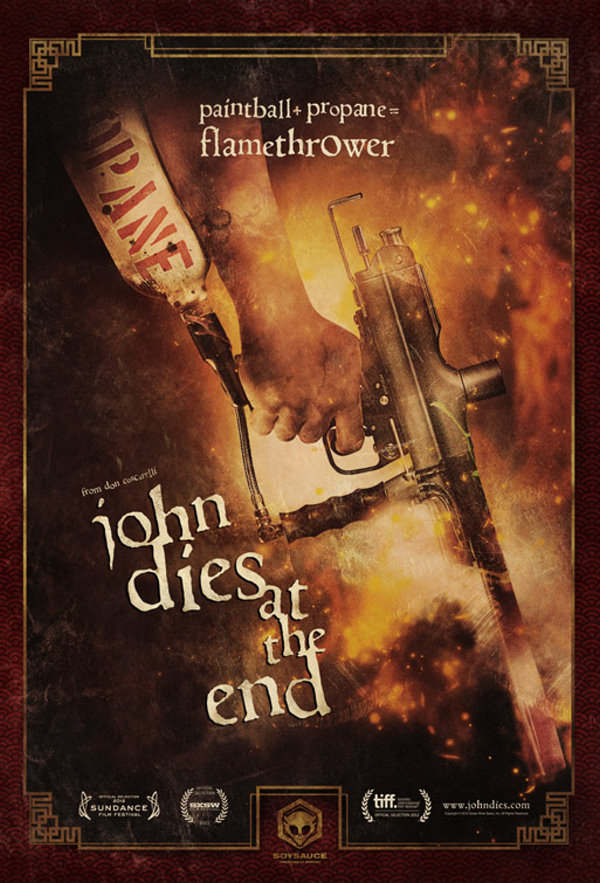
  Our long wait has finally paid off with John Dies at the End, released in the waning months of 2012. Paul Giamatti not only appears in the movie, but is also the executive producer.
 

 Salon has a terrific interview with Giamatti and Coscarelli, which you can (and should!) read here.
  
  Your humble correspondent will meanwhile ponder whether things would have worked out between him and Tanya Roberts when he was 12, but with the soul of a much older man.
Oh, Tanya, we could have had something special.


Wednesday, January 23, 2013

Going to a Film Festival? Do it Right!


As I write this, the director of the International Film Series, Pablo Kjolseth, is in Park City, taking in the Sundance Film Festival. He’s getting up early and staying up late, watching movies until his eyes bleed, so that he can bring the best back home to the IFS.

He’s suffering for you.

But what if you’re the kind of hearty, adventurous cinephile that says, “why, I think I could handle going to a high-powered film festival!”

Film Festivals can be fun, or a LOT of fun, depending upon how you play your cards. Here are some tips I’ve picked up from close to a decade attending the Telluride Film Festival, and odd stints at the Austin Film Festival, Sundance, and SXSW.

Know Your Festival

Every festival is run differently. At the Telluride Film Festival, the film lineup is kept a secret until the day the festival starts, so you can’t plan beforehand. The lineup at Sundance is known months in advance, and if you’re buying tickets, you have to map out your schedule a long way out.

Read up on the festival. Do you need a pass? Can you buy tickets at the venue? Where are the venues? How do you get to them from your hotel? The better you know these answers, the easier it will be for you to navigate the festival, and the more fun you’ll have.

Secure Lodging Well in Advance

The big festivals are popular. Don’t be one of the sad people who wake up a month before the festival and think, “oh, yeah, I should book a hotel room!” SXSW hotel rooms, for example, get scarce 4-5 months beforehand. The group I go with to Telluride locks in a house rental 7-8 months before we go. And we try to have a verbal agreement with the owner when we leave that year that yes, we love the place, and please let us rent it again the next year.

Which leads me to…

Go with Other People!

For me, half of the fun of going to a film festival is the actual film-going, and the other half consists of the spur-of-the-moment, often late-night conversations I have with my rental housemates.

It goes something like this: you go back to the hotel room/condo/rental house after your last film of the day, pour yourself a glass of wine or a beer, and reflect upon what you’ve seen that day. Then, one of your housemates comes back. What, they hated Citizen Kane II? Why? Then, housemate #2 returns. She saw films you did not. What did she see today that she liked? Well, that sounds pretty cool, so you revise the films you’re going to see the next day, based on the feedback you’re getting. Housemate #3 returns, dead set on convincing you that…

The next thing you know it’s 3am, and the living room is hosting four separate conversations, equally animated and passionate.

This is going to make getting up the next morning a bit of a challenge. That's why God made hazelnut double cappuccinos. But really, talking about films with your housemates and other festival-goers is what takes the festival experience to the next level.

Rent a House (or a big condo) with Others

The more people you can get to share the lodging expense, the cheaper it will be for you. In addition to the social benefits, having a kitchen will reduce your food costs considerably. Eating out every meal at a festival adds up. Quickly.

Be Open to New Experiences

One of the ways that the Telluride Film Festival has ruined me is their open, flexible scheduling. They don’t require you to buy your tickets in advance, and in fact, don’t tell you the lineup until you get there. I usually make a daily plan of films I want to see, but I heavily modify it after talking with my housemates and people I meet in line. That new Joan of Arc musical? People aren’t jazzed about it. Okay, scratch that. But that incredibly depressing-sounding documentary on Nebraskan sugar beet farmers? It’s an amazing, life-affirming tour de force! Okay, put that on the list.

Last year at Sundance I read the description for Beasts of the Southern Wild and said to myself, “meh”. But it became clear after a day or two that people were going bonkers over it.

Taking a risk on a film can introduce you to a new genre, a new star or director, that will pay a lifetime of enjoyment dividends.

Or, you may suffer for two hours. But then, it’s on to the next cinematic adventure!

Until your health is so wrecked from lack of sleep, morning coffee, and late-night booze, that you are forced to return to civilization.

Bonus! Here is Pablo Kjolseth at the 2006 Telluride Film Festival, whipping up pizza:


Wednesday, January 16, 2013

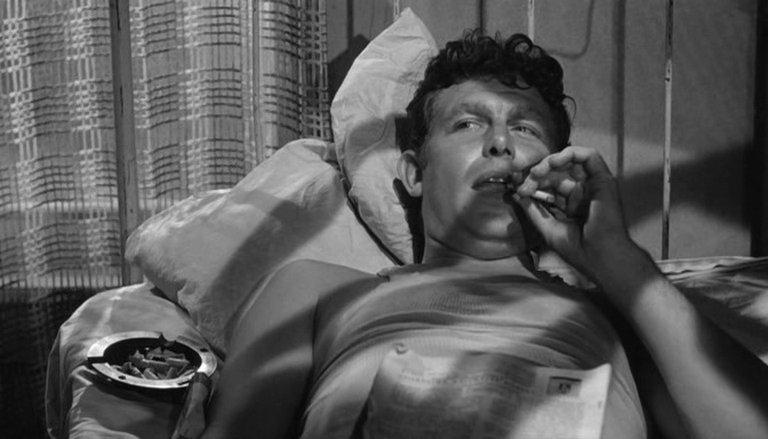
The Heartless, Vile Andy Griffith You Always Wanted to See


That is to say, his character "Lonesome Rhodes" is in 1957's A Face in the Crowd, directed by Elia Kazan.

Neglected by audiences and somewhat panned by critics upon its release, it has steadily gained stature over the years, and rightly so. I can’t say I’m totally up on all of Andy Griffith’s movie roles, but I wouldn’t be surprised if this was his high water mark as an actor.

Over the course of the movie, Griffith’s character, Rhodes, is rescued from a small-town Arkansas jail by an impossibly young and fresh-faced Patricia Neal, whose character Marcia Jeffries is scouting talent for her “A Face in the Crowd” program on her uncle’s radio station. Horse trading cooperation for an early release, Griffith spews forth a folksy country-boy banter and strums a song on his ‘ol gih-tar. Rhodes (who doesn’t know, or just doesn’t want to reveal, his first name) is dubbed “Lonesome” on the spot by Jeffries.


The folks love him, and a star (and also a monster) is born.

It turns out Lonesome Rhodes’ hayseed shtick is enormously popular, and he finds he can make audiences do just about anything. He derails the local sheriff’s political ambitions for mayor. He gets the good folks of Memphis to contribute their quarters to a black woman who needs a new home. He gets his ever-growing audience to start buying a worthless energy pill (this was before worthless energy drinks, and good-as-gold Viagra) called Vitajex.


People take notice. Powerful people. And then Rhodes starts setting his own course.

Without blowing the whole movie for you, let’s just say that Rhodes isn’t too interested in the common good. He’s interested in A#1, and how to get his favorite person to the top, with the population of America hanging on his every word, ready to do his bidding. A lot of people get hurt in the process, and every time Griffith flings some emotional dung in Patricia Neal’s face, your heart breaks along with hers.

 
Although Kazan is a bit ham-fisted and on the nose in certain scenes, it’s still a powerful movie today, and would have been astonishing when it was released in the late 50s. At a time when TV was starting to pick up steam, Kazan clearly saw the power of the medium, and how that power could be twisted to vile ends.

It's a damned fine movie. Go rent it. You’ll never see Sheriff Taylor the same way again.

Plus! This is Lee Remick's first movie.