Thursday, November 29, 2012

With 35mm Film Dead, Will Classic Movies Ever Look the Same Again?

By Daniel Eagan (The Atlantic)
 
Share28 56 Beloved 20th-century movies—and their distinct aesthetic—could be in danger.
  banner2_35mmfilm.jpg
Wikimedia
In June, director Martin Scorsese wanted to show his 1993 film The Age of Innocence at the Museum of the Moving Image in Queens. Thelma Schoonmaker, Scorsese's editor for the past 40 years and a three-time Oscar winner, called Grover Crisp, the senior VP of asset management at Sony, for a 35mm print.*

"He told me that they can't print it anymore because Technicolor in Los Angeles no longer prints film," Schoonmaker recalled. "Which means a film we made 20 years ago can no longer be printed, unless we move it to another lab—one of the few labs still making prints." (Crisp did supply an archival print for the screening.)

Wednesday, November 28, 2012

Jimmy Stewart Is Ready to Give You the Beatdown You So Richly Deserve


Did you ever wonder why Jimmy Stewart changed from this:


...to this?


Two things, really—World War II, and Anthony Mann.

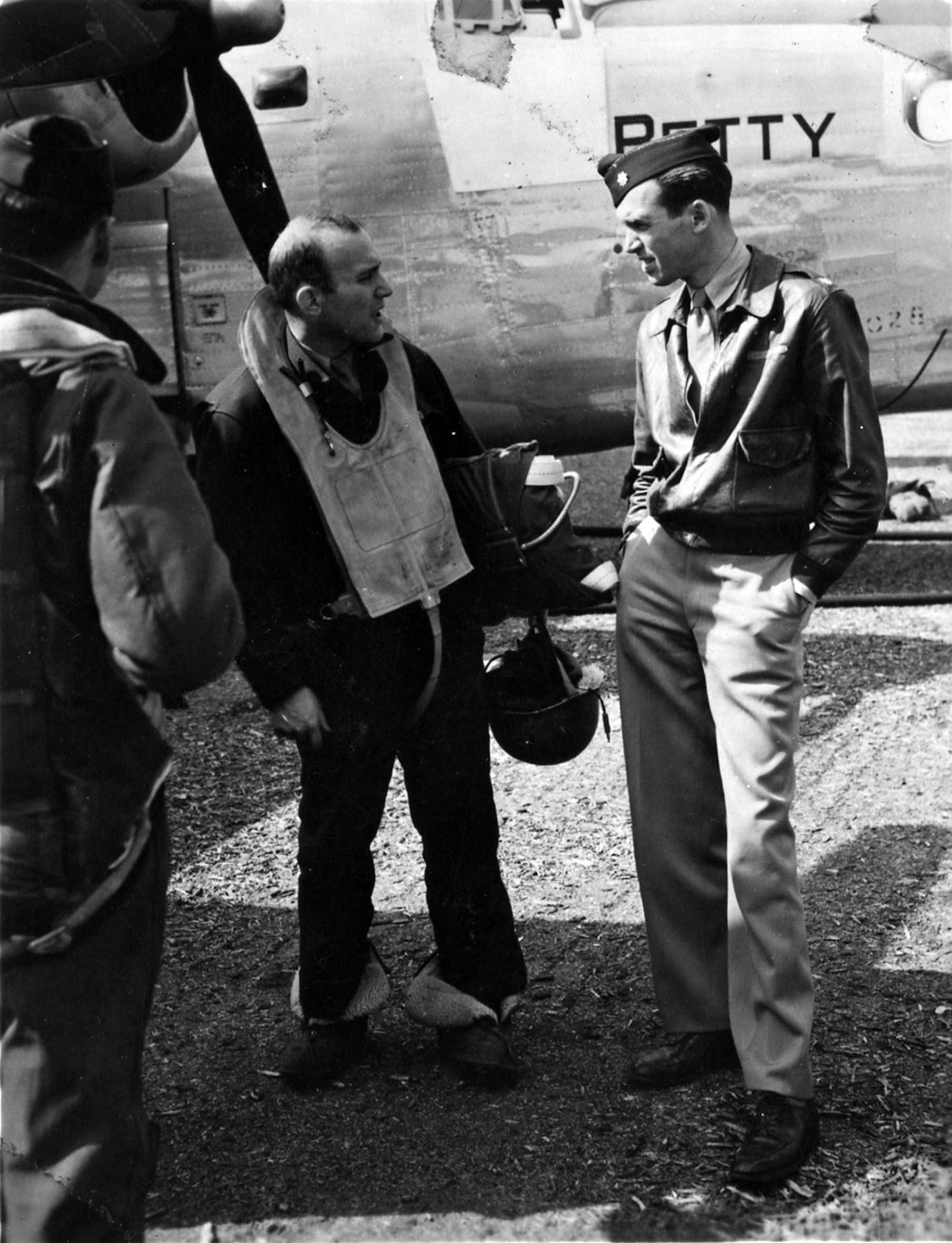
Stewart saw his fair share of combat in WWII—more than his fair share, really. Initially drafted by the Army and rejected for being underweight (he was 6’ 3’’ and weighed only 143 pounds!), he hit the weights and re-enlisted in the Air Corps, just squeaking by. He entered the service as a private, but ended the war a full Colonel commanding the Army Air Force 2nd Bomb Wing. Although he was eventually promoted to staff officer and didn’t have to fly daily bombing missions, Stewart assigned himself as a combat crewman until promoted to Lieutenant Colonel in 1944.


In fact, after WWII Stewart was still an officer in the Air Force Reserve. In 1966, Brigadier General Stewart flew on a B-52 bombing mission during the Vietnam War.

It wasn’t apparent in his youth, but clearly James Stewart had some steel in his spine.

Like many GIs, Stewart returned from the grimness of combat a changed man. America had changed, too—it was ready for darker movie fare, with protagonists who had trouble in their past and conflicting, perhaps-not-completely-wholesome desires. Enter Anthony Mann, a director who was very much at home in this territory, and had by the early 1950s made a number of Film Noirs whose gritty protagonists dragged one foot in the criminal demimonde.

The combination of Mann and Stewart was electrifying, and audiences knew it. These are not your John Ford, straight-up-the-middle westerns, with John Wayne dispensing rough justice and sleeping soundly about it that night. In a Mann/Stewart western, justice is whatever you can defend with your gun—or your knife, or your bare hands. And you might have to break some eggs to get the job done. Things The Law isn’t going to like.

If you’re ready for a dark trail ride into the seamy underbelly of Manifest Destiny, give one of these a try:

The Man from Laramie (1955)


Monday, November 26, 2012

Vyer Films Online


 Hello, fellow IFS aficionados! I thought while we while away these long winter days, dreaming fondly of the darkened Muenzinger auditorium, we might avail ourselves of an exciting new online offering.
  Like our beloved IFS, Vyer films offers selections out of the mainstream. In their own words, "Hollywood makes movies for toddlers, tweens, and teenagers. We find and stream films for everyone else."
  They specialize in films previously unreleased in the US, something I imagine most IFS fans will find of particular interest.
  You can watch the first fifteen minutes of any film for free, then it's $7 for a "lifetime" rental.


Tuesday, November 20, 2012

Do We Need More Star Wars Movies?


As we hurtle helplessly towards Thanksgiving, my mind cannot help but turn to—Star Wars!


Ahem. Actually, I don’t remember most of that abomination, but I do remember the animated segments, which are quite good, in a late 70s Heavy Metal style.


However, I digress. Since George Lucas sold Lucasfilm to Walt Disney for just upwards of four billion dollars, Disney lost no time announcing that a new trilogy is in the works, and that Lucas is being retained as a creative consultant.

Of course, the question “do we need more of this franchise?” is moot, since Disney bought the company to continue flogging this dead, incredibly profitable horse—and flog it shall, with abandon! The question then becomes “will these be movies we want to go see?”

The Empire Strikes Back was just a Hell of a movie. It didn’t try to be a rehash of the first movie, and it was all the better for it. The pace was relentless and the dark tone was just the tonic for the overbearing sweetness of the first movie. It also (wisely) gave Luke the boot and let the two really exciting characters get together—Han and Leia.

After that, the franchise went downhill for me. The second trilogy was just a mess. So much so that I didn’t even bother seeing that Attack of the Clones sandwich filler.

Lucas is amazing at tapping into his nostalgia and turning those happy memories into movies. It was the clout he gained by making the highly profitable American Graffiti that allowed him to make Star Wars in the first place. He and Steven Spielberg then went on to repackage their love of old cliffhanger serials as Raiders of the Lost Ark.

Lucas’ technical skills are also highly developed. He founded Industrial Light & Magic to help with the production of Star Wars, and it has rightly become an 800-pound gorilla in the special effects industry.

His writing and directing skills are—let’s put it this way. Lucas wrote the original stories for all of the Star Wars films, but handed over the directorial and scriptwriting reins for The Empire Strikes Back. He started creeping back in Return of the Jedi, taking half the screenwriting credit with Lawrence Kasdan. He wrote the screenplays for and directed the entire second trilogy (except for Attack of the Clones, in which he shared screenwriting credit with Jonathan Hales).

Look into your heart. How did you feel about each of those films?

I’m not opposed to more Star Wars films on principle, but I won’t throw Disney my money if they can’t be bothered to make films worth seeing. If Disney wants to take the best ideas that Lucas has and wed them with good storytelling and inspired direction (is Joss Whedon doing anything these days?) then the franchise is on firm footing and will make shareholders happy for years to come.

If not, then good luck to ya, Disney. The fanboys will keep buying tickets (for a while), but not me.

Thursday, November 15, 2012

Sundance Selections

Greetings, DCFNs--(aka: deep cover film nuts--by way of Nigel Andrews of The Financial Times)
Since this semester's IFS schedule is coming to a close, in the interim i thought i'd write a bout a few of the films i had the opportunity to see at this past January's Sundance Film Festival.
Some of these have had limited releases nationwide, others have been released only in NYC and perhaps L.A., and some will only see the light of a big screen in true art houses like the IFS or the Boedecker.
  The ones i've listed below, no matter how small their true release periods were, are making their way to DVDdom and streaming. (i am not a video streamer, so i've no info about whether these are available in that format.) Often this is the only format in which films without stars or large promotional budgets will become available to film freaks like us in non-major markets. Here are some to be on the lookout for:

The Invisible War--A searing documentary that looks deeply into the war on women in the U.S. military. Women who've been raped (and one man) are the brave narrators here of what they have gone through, and their complete frustration in holding the perps accountable. Devastating and essential. Yes, it's a difficult film to watch, but when the verdict of a civil court regarding these crimes is that "rape is an occupational hazard for women in the military," (so just suck it up, girls) it seems to me that citizens of this country, as divorced as most of us are from the armed forces, should sit up and take notice. Doesn't it seem like this "finding" should appear on recruitment posters, at least in the fine print??? The atmosphere for women in the society at large is often toxic, but this encompasses an entirely other order of misogyny.
Shown at the IFS on 11/11/12, now available on DVD.

Escape Fire: The Fight to Rescue American Healthcare: Our healthcare system is broken. Potent forces fight to maintain the status quo in a medical industry created for quick fixes, rather than prevention; for profit rather than care. Healthcare is at the center of an intense political firestorm in our nation. But the current battle over cost and access doesn't address the root of the problem: we have a disease-care system, not a health-care one. After decades of opposition, a movement to introduce innovative, low-cost methods of prevention and healing is finally gaining ground.
  The filmmakers combine dramatic personal stories with the efforts of leaders trying to transform healthcare at the highest levels of medicine, industry, government, and even the U.S. military. Fascinating, especially for showing how the military, with it's huge patient base, and wishes to cut costs in health care delivery, is leading the way in innovative and alternative therapies. Who knew?
Now available on DVD

Searching for Sugar Man: This one had a fairly wide release into mainstream theaters. It showed here for several weeks at the Century multiplex.
  With great music from the main character, a forgottten poet and songwriter named Sixto Rodriguez, this is an amazing "truth is stranger than fiction" detective story. It follows the winding trail of a couple of South African music fans who set out to find out the truth about Rodriguez, whose two albums from the 70s, which never went anywhere in the U.S., became gigantic, generation-spanning smash hits in South Africa, beginning during apartheid. Just how they even got to the country is a little sketchy, and they were subject to censorship by the government, yet, because there was such demand among the young people, there were people who saw there was money to be made and got them in.
  The albums had no information about the artist, and there were rumors that he'd killed himself in one of several dramatic ways...but nobody really knew. When you find out, along with the
detectives, what the real truth is, you'll be blown away! It's one of the most human, uplifting and incredible stories i've ever heard. Don't miss it!!
It's possisble to "pre-order" this on Amazon, but there's no set release date--be on the lookout!

The House I Live In--Truly great--it won the documentary grand prize . An extremely in-depth look at drug policy and the war on drugs in America for exactly what it is. David Simon breaks it down at the end thus:
(paraphrasing) It's not even really about drugs anymore, but all about economics realities and poor people. We've systematically lost the bulk of our entry labor jobs, and America just doesn't need the poorest 1/3 to 1/4 of it's population. So let's just get rid of them. Warehouse them in prisons, sometimes whilst getting what amounts to slave labor out of them, and make a profit for some other people while we're at it.
AND, i must add, a comment from the great Gloria Steinem on Bill Maher some time ago. When asked why the right was so insistent on making birth control of all kinds and abortion in particular very hard or impossible for women to secure, she stated "These men want to control the means (human beings as far as prison slave labor goes) of production." 'Nuff said.
A film that deserves, but didn't receive, wide distribution. It could ostensibly show up on PBS, HBO or one of the indy film channels. It's had a limited release in the cities, including Denver, but, like "The Invisible War", it's not a "fun film." Essential viewing, though. Also, don't be surprised if it gets a "best doc" Oscar nomination. For now, no presence on Amazon. DVD??

The Law in These Parts: A fascinating film if you are at all interested in the irreconcilable situation between Israel and the Palestinians.

From a review advertising the film's opening at the Film Forum in NYC 11/14/12:
Since Israel conquered the territories of the West Bank and Gaza Strip in the 1967 war, the military has imposed thousands of orders and laws, established military courts, sentenced hundreds of thousands of Palestinians, enabled half a million Israeli "settlers" to move to the Occupied Territories and developed a system of long-term jurisdiction by an occupying army that is unique in the entire world.

The Law In These Parts explores this unprecedented and little-known story through testimonies of the military legal professionals who were the architects of the system and helped run it in its formative years. The film attempts to ask some crucial questions that are often skirted or avoided: Can such an occupation be achieved within a legal framework that includes genuine adherence to the principles of rule-of-law? Should it? What are the costs that a society engaged in such a long term exercise must bear?
---
As the situation in the Middle East gets hotter by the hour, this film is more timely than ever.
This has not played in our area, and there are no DVD release dates yet. Be on the lookout. It's another one that could appear on PBS, HBO or one of the indie film channels.

5 Broken Cameras--Here is a film from another POV entirely. Palestinian/Israeli co-directors, take a look at Israel's encroachment through the settlements. The title comes from the 5 video cameras that the Palestinian director/cameraman used throughout his village's peaceful protests of the constant theft of their land and heritage. We, the audience, are actually witness to each camera being smashed as it's filming of these protests comes to an abrupt end. I've never seen anything like it. Tremendously frustrating, informative, and sad. Truly a chance to be in the shoes, and look through the eyes of a Palestinian person.
This was one of the first films to get distribution after the festival. It received good notices, but i don't think it ever showed in our area. It will be released on DVD 1/15/13.

Monsieur Lazhar: This is among the most heartfelt, genuine films i've seen in a good long time. Nominated for the foreign language Oscar, It's the story of the tragic sudden suicide of a teacher in a Montreal primary school and the exile of a beautiful man from Algeria, who becomes the substitute for the class of the deceased. This film is filled with fully-formed characters, among them two children in the class, Alice and Simon, who have been particularly deeply wounded by the suicide.
  While Msr. Lazhar teeters on the brink of deportation every day (nobody is aware of this but the audience and him), he brings all he has to offer to healing these children and giving them a place of safety and self-expression. There is conflict and misunderstanding as well as cultural clash along the way, but mostly there is tenderness and love. In the hands of the wrong filmmakers this could have been so sugary sentimental, but instead it's a tribute to the powers of the human spirit to rise again after grave injury. i guess you can tell i loved it!
Played several calendars ago at the IFS, and had a semi-national release. Now available on DVD.

Ai Wei Wei, Never Sorry--An inspiring look at a brave artist living inside China. Ai Wei Wei lived in NYC for about 10 years in the 90s, and then, as China opened up, he returned, already a famous artist in the world at large. As he says here, because he is famous, it's his duty to take chances and challenge the government in it's treatment of the Chinese. The first action he took was around a devastating earthquake in which hundreds of children were killed because the government had built substandard schools. His tools are the internet and twitter on which he has a gigantic following. He invited citizens to join him in interviewing parents regarding the names of their children who were lost. Needless to say the government didn't appreciate this. He got a lot of publicity and cooperation. People want to feel that they can make a difference--a feeling's that harder and harder to come by.
  Ai took the names of all these children and put them each on a red backpack like kids carry to school, and then built a giant display for them all. It's an overwhelming sight. So much more powerful than just a list of names could ever be.
  This is just one of the many art pieces we see inside the film. Ai Wei Wei fully cooperated with the filmmaker and the interviews with him are terrific.
This film showed at both the Century and the Boedecker. May appear on PBS, HBO or one of the indie film channels. Available on DVD 12/14/12.

Detropia--This is an engaging, compassionate, and beautiful film about a very sad subject: the near death of Detroit, Michigan. Two young filmmakers, Heidi Ewing and Rachel Grady (their previous doc, "Jesus Camp" got an Oscar nomination) take a look at the crumbling city, interview many residents who've made their lives there and are sharing in the death throws, some who feel they must leave, and some who elect to stay though "the house is burning down." The film is infused with energy and elegy.
Played 10/28/12 at IFS. Will come out on DVD 1/15/13.

Sleepwalk With Me--Such a fun and original film. This is the story of a stand-up comedian, played by the director, Mike Birbiglia, who has just begun his career at the slop bottom. He is now on the road constantly, and has some severe sleep-walking issues. Pretty dangerous when you are sleeping somewhere different, amongst strangers, every night. It's hilarious, and has great supporting actors too, especially Lauren Ambrose as Birbiglia's long-suffering fiancé.
This played at the IFS 10/8 and 10/9/12 as well as the Boedecker. It will be released on DVD 12/18/12.
LINDA STONEROCK,  DCFN


Wednesday, November 14, 2012

Inside The Mind of Cary Grant


Over the weekend (or “le weekend”, as the French say) I re-watched Father Goose, a favorite of mine from growing up. (It was a staple of weekend movie fare on Ted Turner’s WTBS on the weekends in the early- to mid-80s.)

Father Goose is your standard late-Grant-era light romantic comedy trying to ride the financial coattails of 1959’s Operation Petticoat. Grant produced the film through his Granox production company, and so had a high degree of creative control. At this stage of his career Grant was becoming weary of playing the romantic lead to women half his age, but he smelled an Oscar in the upbeat, family-friendly story. (Grant never received an acting Oscar, although he was awarded an honorary Oscar in 1970.)

Grant would later say that the role of misanthropic, unshaven, boozy Walter Eckland was closest to his real personality. Usually the epitome of crisp, suave sophistication, Grant was certainly playing against type in Father Goose (catnip to the Academy). As I was recently reading Marc Eliot’s Cary Grant: A Biography, it became clear that this is more than a breezy, off-the-cuff statement: it says something profound about who Cary Grant really was.

Take a look at Father Goose’s opening credit sequence:


Eckland eats a sandwich, drinks a (Bomber? Did they call them bombers back then?) of beer, and hums along to the radio while he steers his launch into port. In fact, he untucks his shirt in the opening credits, and it stays untucked for the rest of the movie.

According to Eliot’s biography, this is exactly the kind of man Grant was in his private life. His needs were small (he only wanted a bed, a few chairs, a radio, and a refrigerator, Eliot says), and to relax he would often just lay in the sun, listen to the radio, or read while in the company of someone else. In the 30s his lover and companion Randolph Scott introduced Grant to Howard Hughes, and the two apparently got along famously, in large part because both were privately laconic and unassuming. Eliot paints a peaceful, domestic picture of Grant and Hughes hanging out together in Hughes’ mahogany study, with Hughes working on new aircraft designs and Grant sitting nearby, smoking and reading a book. They would do this all afternoon and into the evening, with perhaps nothing more than a few words spoken between them.

Filmmakers often project their inner selves upon the screen, and in this case, I think Grant is lowering his guard and letting you see exactly who he is, and what makes him happy.

A sandwich, a beer, humming along with the radio on a nice day.

Wednesday, November 7, 2012

Wake in Fright: A Primer of Sorts (No Spoilers!)


Wake in Fright landed in Portland a few weeks ago (at my neighborhood theater!). I'm a great fan of early 70s transgressive cinema, and this film is an amazing ride. Here are some interesting factoids to ponder before you see it at the IFS.

The Beginning of the Australian New Wave?

Wake in Fright was released in 1971, before the Australian film industry started making an international name for itself with films like Picnic at Hanging Rock (1975), Mad Max (1979), Breaker Morant (1980), and Gallipoli (1981). Although arguably not a completely "Australian" film since the director Ted Kotcheff was Canadian, the screenplay was based on an Australian novel.

The Screenwriter Knew What He Was Talking about

The screenplay, in fact, was based on Australian Kenneth Cook’s novel of the same name. After high school, Cook worked his way around Australia, bouncing from job to job (lab technician, boatshed operator, journalist, and television documentary maker). It seems likely that he experienced the charms of Australian desert town life firsthand. It is believed that Cook based the novel’s fictional Bundanyabba on Broken Hill in New South Wales.

Gosh, Haven’t I Seen this Godforsaken Landscape in other Films?

Excellent question! You have, indeed. Parts of The Road Warrior, The Adventures of Priscilla, Queen of the Desert, and Mission: Impossible II were filmed in and around Broken Hill.

Actors to Watch out For


Jack Thompson was just starting out at the time of Wake in Fright, but over four decades he has appeared in over 100 films and is still working today. He had a memorable turn as the military defense lawyer in Breaker Morant, as well as popping up in Kojak: The Price of Justice and Star Wars: Episode II – Attack of the Clones.


Yes, he was the dude who played “Crocodile” Dundee’s friend (in both movies). John Meillon started his acting career at eleven in an Australian Broadcasting Corporation radio program, and was the voice of Victoria Bitter commercials until his death in 1989.


Do you really need me to list Donald Pleasance’s numerous acting triumphs? He’s played everybody from Blofeld in You Only Live Twice to Halloween’s Dr. Loomis, is what he’s done. 

Where Has this Film Been for 40 Years?

Although it was a hot ticket at its 1971 Cannes Film Festival premiere, and received excellent international reviews, Wake in Fright did poorly in Australia (perhaps it cut a bit too close for the domestic audience). The prints eventually disappeared, and the last one known to exist was too degraded for transfer to videotape or DVD. After a decade-long search by the original editor, Anthony Buckley, in 2004 the negatives were discovered in Pittsburgh, in a shipping container marked “For Destruction”. Sydney’s AtLab Deluxe digitally restored the film (with the support of the Australian National Film and Sound Archive). This restored version was invited back to Cannes by guest curator Martin Scorsese, and was shown at the Sydney Film Festival in June, 2009. This time the home team showed more enthusiasm, and a limited Australian theatrical release was followed by DVD and Blu-ray distribution later that year. Wake in Fright is currently being distributed in the United States through Drafthouse Films.

Monday, November 5, 2012

Get Out the Vote!


  We should all do our patriotic duty and vote tomorrow, but I think this young lady speaks for most of America (if not the world!) at this point.
  What better way to escape the madness than catching The Godfather and The Godfather Part 2 at IFS tonight and tomorrow night? The opportunity to see these landmark films in the theater where their beautiful, dark cinematography can be appreciated is a welcome one, indeed.
   Coppola and Puzo's meditations on a power, leadership, and above all, family, seem as timely today as they did in 1972, but maybe you're the political junkie type, and you need your fix?


  A Face in the Crowd, from 1957,stars Andy Griffith as an amoral drifter turned media superstar who eventually wields vast political power. It was an atypical role for Griffith, far better known as a patient, wise and loveable Southern gentleman, and he tears into it with relish.


  Bob Roberts was written, directed, and starred in by Tim Robbins in 1992. This faux-documentary of a rightwing folksinger running a corrupt political campaign is every bit as funny and pertinent today as it was in '92.

  1972's, The Candidate, starring Robert Redford and written by a former speechwriter for Senator Eugene McCarthy, traces the slow, steady, erosion of values endemic to politics as Redford's idealistic candidate makes sacrifice after sacrifice to broaden his appeal.


  Finally, we have Election, Alexander Payne's 1999 comedy starring a very young Reese Witherspoon, and a very middle-aged Ferris Bueller(!!). Witherspoon plays the ruthless and relentlessly cheerful Tracy Flick, whose seemingly unstoppable campaign for student body president is opposed by Broderick's high school civics teacher. The fight over the seemingly low-stakes contest reaches dizzying, surreal (and hilarious!) heights.

  Happy election day! I sincerely hope the candidate of your choice prevails, providing it is the same candidate I support!


Thursday, November 1, 2012

Marina Abromovic: The Artist Is Present

Marina Abromovic: The Artist Is Present
D: Matthew Akers

Playing at the IFS in Muenzinger Auditorium
THIS Sunday, November 4th at 4 p.m. and 7 p.m.

Marina Abromovic must be among the most famous and successful living artists that most people have never heard of. How big is she? In 2010 she was given a retrospective surveying her 40 years of artistry, at MOMA--the ultimate validation for an artist. This was the first museum retrospective anywhere of performance art, Abromovic's metier. i was lucky enough to get to experience this amazing show, though i didn't stand in the line to sit in front of the artist herself. i don't have that kind of patience.
  Performance art arose in the 1960s, when other media began to challenged painting as the main mode of legitimate expression.
  This documentary explores the herstory of Abromovic's performing life: she began in the 1970s in Yugoslavia, had a significant partnership with an artist named Ulay from 1976 to 1988 when  they created "The Relationship Works", then she continued on solo, becoming the first performance artist to be represented by a gallery (Sean Kelly in NYC) where she has performed, to great acclaim, most of her pieces since the 90s. Clearly, she is a fearless, and deeply original artist. Even if you've never been exposed to, interested in, or felt you could relate to performance
art, her dedication and tremendous stamina will amaze you. She asserts that the artist must be a warrior; she must conquer herself, and conquer her weaknesses. Over and over she epitomizes these goals.
  When Abromovic first appears in the film, she muses that in the 10 years culminating in the MOMA show, she realized "there is only one question i haven't heard: why is this art??" The film interrogates this question deeply, and without judgement.
  Everything here leads up to the MOMA show for which she creates a radical new piece: The Artist is Present--and is she ever. For this creation, she challenges herself, and promises the curators, that she will be present in the great 2nd-floor rotunda, 7-1/2 hours a day, 6 days a week for 3 months. She will sit in stillness across from whomever of the museum patrons wishes to sit facing her, for however long that person wants to stay, and give them her undivided gaze, and receive theirs. This may sound strange and a bit too minimal (or boring) to be considered art, but as she explicates it: "performance becomes life itself--something that's near to nothing--with nothing to hide behind--no story--only the body." Day after day this concerted action completely alters the atmospheric charge of an incredibly busy museum and slows many people dramatically, both those participating and those observing. "Once you go through the door of pain, you enter into another space entirely. It is this altered state of mind that the public senses." If you don't at first think this would be painful, try sitting still on a solid wood chair for just an hour, and focusing on the same point in front of you. Then imagine what it would be like to do that for more than 400 hours, day in and day out, all the while being observed at close range by individual strangers and a surrounding crowd of onlookers. It was and is amazing to behold.
  Along with this performance, we also get a look into the 5 other floors of the museum, which were given over to video and photo documentation of her works. She trained 30 young artists to recreate 5 historical pieces from her career as well. All of them were nude, as she was when she originated the works. They were as fearless as their mentor, and it was unforgettable, i can attest. As she told them, "you must create your own present charismatic space." They did, but she represents the zenith of performance art, then and now.
  Abromovic has worked all her career to have performance art seen as real art. For me, she completely accomplished this in the show itself, and again in this film document. Do yourself a favor and take this opportunity to experience a radically different kind of art by a totally committed artist.

Last week i wrote about the latest film by the French director, Bruno Dumont, "Outside Satan." A friend sent me a link to an interview done with him by Karin Badt, which appeared on The Huffington Post. As i read through it, i was immediately taken by how much the philosophy of Dumont and Marina Abromovic converge. The director says he is searching for modern images that have sacred power; "...yes, my films are mystical, to make people feel the mystery, to inspire them to experience for themselves the miracle of existence. Hollywood films are alienating to the spectator because they use too much dialogue, too much explication and leave no space for the viewer." I am sure Marina Abromovic, who has created her art through the flow of energy through her body and mind, fearless silence and the power to attract and hold the attention of the audience, would agree with every word.


--Linda Stonerock