

Tuesday, April 23, 2013
Bringing Kung Fu to the Masses

Monday, April 22, 2013
The Sound Design of Oblivion

The plot is a bit of a hodge-podge of numerous science fiction films from the past (director Joseph Kosinski, here redeeming himself from Tron: Legacy, seems to prefer the term "homage"), but stands well on its own and keeps enough intelligent plot twists coming to maintain an effective and involving narrative throughout the two hour plus running time.
The jaw-dropping world design is ably assisted by a synth-heavy soundtrack credited to M83, as well as lush and immersive sound design. Sound is almost a character unto itself in a science fiction movie, and to Kosinki's credit, he pulls it off with aplomb.
Here's a short video covering the sound and music design of Oblivion, featuring Kosinski and several of his collaborators:
Thursday, April 18, 2013

Wednesday, April 10, 2013
Noir Died, but the Crime Film Lives On

The Hollywood Theater in Portland is running Polyester Pulp: The 70s Crime Series over
the next few weeks. I’m fascinated by early 70s movies, probably because they
were gone by the time I was old enough to go to the movies in the late 70s.
They are beyond my living memory, and therein lies the catnip.
Dan Halsted, The Hollywood Theater’s Head Programmer, put
the series together. His comments before tonight’s initial film Charley Varrick were interesting; he
pointed out that although Film Noir as a genre is now revered, those films were
intended to be low-budget "B" crime films. The initial wave of noir films died out
by the early 60s, but crime films made a comeback in the early 70s. These films
are a different animal, in part because the death of the Hays Code allowed
filmmakers to explicitly show the sex, violence, and sadism that classical noir
could only lightly touch.

Don Siegel directed the first film of the series, Charley Varrick (1973). Although
most well-known for directing Dirty Harry and Invasion of the Body Snatchers, Siegel had directed a number of noirs in his youth, including The Big Steal and The Lineup.
Charley Varrick is
a treat for those familiar with Siegel’s films, and those of his protégé Clint
Eastwood. Eastwood would poach some of these actors for his own 70s acting
troupe, such as John Vernon (Fletcher) and Woodrow Parfrey (Carpetbagger) in The Outlaw Josey Wales. Foremost from
Siegel’s crew is Andrew Robinson (The Scorpio Killer in Dirty Harry--and also Garak from Star Trek: Deep Space Nine).
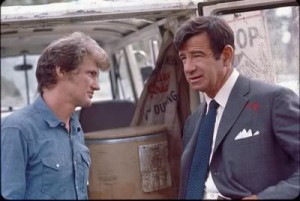
I admit, Walter Matthau seemed a bit of an odd choice as the
lead, mostly because in his early 50s, his days as a romantic lead were over.
He does bring to the screen a mix of street smarts and weariness that says “I
know the score, but this is a young man’s game, and I think it’s time to get
out.”
Perhaps that’s the key to Matthau’s casting—he’s an older
man, and his time is past, like noir itself. Siegel wanted the title of this
film to be Varrick’s company’s motto, “Last of the Independents”.
Subscribe to:
Posts (Atom)