Saturday, December 8, 2012

Death of Cinema - in 3 parts.

Below are two essays and one excerpt that were brought to my attention by David Bordwell. The first two are links to articles written in 1999 by Godfrey Cheshire that very prescient. (Long, but worth the read.)

http://nypress.com/the-death-of-film-the-decay-of-cinema/

Part 2 of of Cheshire's  "Decay of Cinema" can be found here (some overlap here, but if you skip down to the 12th paragraph that starts off with 'When people first saw film..' you can pick up the thread from there):


More recently, Tarantino also weighed in on the subject of cinema being dead, because it's now mutated into a different beast altogether ("television in public"):

Tarantino: No, not at all. But I don't intend to be a director deep into my old age.
Russell: Wait a minute. That's bad news for everybody.
Tarantino: I'll probably just be a writer, or I'll just write novels, and I'll write film literature and film books and subtextual film criticism, things like that.
THR: Why do you plan to make that change?
Tarantino: Well, part of the reason I'm feeling this way is, I can't stand all this digital stuff. This is not what I signed up for. Even the fact that digital presentation is the way it is right now -- I mean, it's television in public, it's just television in public. That's how I feel about it. I came into this for film.
Affleck:  Digital projection as well? 'Cause film's over. I mean, there are no film projectors in the country.
Tarantino: Yeah, and that's why --
Russell: I won't shoot digital.
Tarantino: No, I'm not talking about shooting digital.
Russell: Do you shoot digital?
Tarantino: No, I hate that stuff. I shoot film. But to me, even digital projection is -- it's over, as far as I'm concerned. It's over. So if I'm gonna do TV in public, I'd rather just write one of my big scripts and do it as a miniseries for HBO, and then I don't have the time pressure that I'm always under, and I get to actually use all the script. I always write these huge scripts that I have to kind of -- my scripts aren't like blueprints. They're not novels, but they're novels written with script format. And so I'm adapting the script into a movie every day. The one movie that I was actually able to use everything -- where you actually have the entire breadth of what I spent a year writing -- was the two Kill Bill movies 'cause it's two movies. So if I'm gonna do another big epic thing again, it'll probably be like a six-hour miniseries or something.''
(excerpted from here):

http://www.hollywoodreporter.com/news/ben-affleck-quentin-tarantino-4-394576

For a more optimistic view, read link below (which has a number of very interesting comments too):

http://www.nytimes.com/2012/12/09/magazine/film-culture-isnt-dead-after-all.html?_r=0

Also, looking forward, is this bit on The Dawn of High Frame Rate Cinema:

http://magazine.creativecow.net/article/the-hobbit-debuts-high-frame-rate-cinema

Thursday, December 6, 2012

Movie Review: Holy Motors

Leos Carax
Holy Motors
115 minutes
Writer and Director: Leos Carax
Starring: Denis Levant, Edith Scob, Eva Mendes, Kylie Minogue, Michel Piccoli
Cinematography: Caroline Champetier
Editor: Nelly Quettier

Eva Mendes and Denis Lavant
Kylie Minogue


Sadly, I haven’t seen any of Leos Carax’s other films. Perhaps you’ve seen "Boy Meets Girl", "Mauvais Sang", or "The Lovers on a Bridge"?  I’ll be sure to look for them after seeing his latest effort, "Holy Motors". Carax is a Parisian; it’s in his blood, his vision, humor, style and all over this film.  Paris is that grand city of lights where stories unfurl in the dark and, if you are lucky, you witness something magical, incredible and delicious without a ribbon of sunlight to adorn it. Even the famous Poilâne bread is baked in the middle of the night.  

Oscar (Denis Lavant) is on an journey of episodic delight.  I understand that Carax has many muses and Denis Lavant is one of them.  He is in almost every scene and possesses the physical agility of a tree monkey. He's fun to watch.  It’s a smooth and even performance in a film that is nothing but bumpy and surprising.  

Carax himself opens the film.  After waking from a dream (or are we entering his dream?) his hand turns into an allen wrench and allows him to open a secret door to a movie theater where an audience is fast asleep while a movie unspools.  The camera is on the balcony with him in the back row. Has he revealed himself to us?  Are we that audience in his dream? Is this an invitation to go on a ride?  There are eleven episodic tales depicted in "Holy Motors" and we begin in the pre-dusk hours as an industrialist in suburban Paris kisses his children good night and is whisked into his waiting limousine by Madame Celine (Edith Scob), his sexy and mature chauffeur, who doubles as a guardian angel and confidante. 

It’s worth noting that this film is based on a short that Carax made called "Actors". I haven’t seen this film, but just the title helps you understand the edifice that Carax is constructing with "Holy Motors".  Although we are taken on a episodic journey, we are essentially always in one spot, with the actor, as he delves into one character after another.  After he is killed, dies of natural causes, or the script spits him out, he returns to the limousine where Madame Celine puts him back together again until his next part.  And the ride continues. 

The transformations that we witness are enhanced by make up, hair pieces, CGI effects, prosthetic limbs, and fabulous costumes. As we become engaged, we realize it is make-believe, movie magic, dramatic storytelling and pure fantasy that is sucking us under.  Take special note of a dry and speechless performance from Eva Mendes in a killer episode of almost pornographic devilish delights and later, a key scene with Kylie Minogue where the artificial wall within a wall is broken even further. 

During the screening I attended in New York at the Walter Reade Theater at Lincoln Center, an elderly couple seated in front of us left after the Eva Mendes scene.  And shortly after, a few other couples found the exit doors too.  It is not easy storytelling, exactly because the story is outside of the film. You are not witnessing a traditional linear plot for 115 minutes. You are on the fringe, where it can be a bit more interesting sometimes.  

As an analogy, think of a farmer’s market as a movie.  The beginning, middle and end of the farmer’s market is a linear story.  You are engaged in the traditional structure of the story.  Then go to just one vendor  and witness a single player (or actor) of the farmer’s market as a man, a husband, a father, a son, a brother, an activist, a farmer and so on.  This human being is all of these things.  Yet, when you pass his or her stand, you see only the farmer selling vegetables as part of the greater whole of the “film” that we have constructed.  In "Holy Motors", you are seeing the actor embody the man, the farmer, the husband and so on.  There is no edifice. There is no place to be something other than the role, the part, the gig, the performance. If you love the construction of movies, as I do, you’ll appreciate the edifice coming apart at the seams and revealing something humorous, playful, and spry.   And as you witness this, remember what actors do, what kind of risks they're willing to take at the beginning of a career and how they make decisions about a particular role. And then think about aging actors who have fewer and fewer parts and want to take less and less risks towards the end of a rambunctious and creative career. You can tell they did a movie just to take the money and run.  If you need help, imdb Nicolas Cage. 

Acting is a curious art.  When I’ve met actors, I notice that they don’t have much to say, they don’t take up very much room psychologically and they have the ability to blend in quite well, if they are not overly famous. When an actor is really good, it’s as if they have that magical and temporal ability (mixed with a tremendous amount of insecurity) to be a form that is ready and willing to be filled by a story, a character, or a fictional personality for a brief moment in time, perhaps just long enough for a director and confident personality like Carax to capture what it’s like and share it with us, the audience in the dream.  

As an aside, there were moments of transcendental filmmaking for me in "Holy Motors" that can't be explained in a review because they had no beginning, no middle and no end.  They existed and were gone  - all for no apparent reason except to celebrate the freakish and wonderful moments that happen when people move from one space to another. 

Go see the "Holy Motors" when it plays at IFS and let me know what you think! umorera (at) gmail dot com.

Actors Acting
Actors Acting
Actors Acting


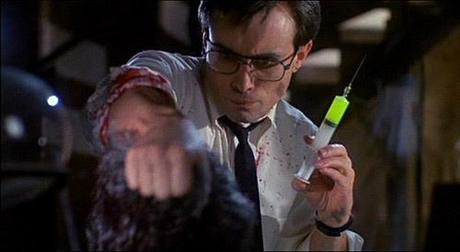
"Re-Animator" and "The Terminator" – Outrageous Connections!

Truth is stranger than fiction when it comes to ties between 1984’s The Terminator


and 1985’s Re-Animator!

  • Re-Animator and The Terminator were filmed concurrently at the same studio in Los Angeles.
  • The first re-animated corpse (in the morgue, not the cat or Dr. Gruber) was played by Arnold Schwarzenegger’s body double, Peter Kent.
  • At the time of shooting, co-star Bruce Abbott’s wife was Linda Hamilton. Later, she would marry The Terminator director James Cameron.
  • James Cameron’s dad has a cameo in Re-Animator as a hospital patient.
  • Both movies shared the same production crew. After The Terminator wrapped, the crew went directly to work on Re-Animator.
  • Re-Animator co-star Bruce Abbott was born in Portland, Oregon.*

*This has nothing to do with The Terminator. It is merely a shout-out to my new city.

Thursday, November 29, 2012

With 35mm Film Dead, Will Classic Movies Ever Look the Same Again?

By Daniel Eagan (The Atlantic)
 
Share28 56 Beloved 20th-century movies—and their distinct aesthetic—could be in danger.
  banner2_35mmfilm.jpg
Wikimedia
In June, director Martin Scorsese wanted to show his 1993 film The Age of Innocence at the Museum of the Moving Image in Queens. Thelma Schoonmaker, Scorsese's editor for the past 40 years and a three-time Oscar winner, called Grover Crisp, the senior VP of asset management at Sony, for a 35mm print.*

"He told me that they can't print it anymore because Technicolor in Los Angeles no longer prints film," Schoonmaker recalled. "Which means a film we made 20 years ago can no longer be printed, unless we move it to another lab—one of the few labs still making prints." (Crisp did supply an archival print for the screening.)

Wednesday, November 28, 2012

Jimmy Stewart Is Ready to Give You the Beatdown You So Richly Deserve


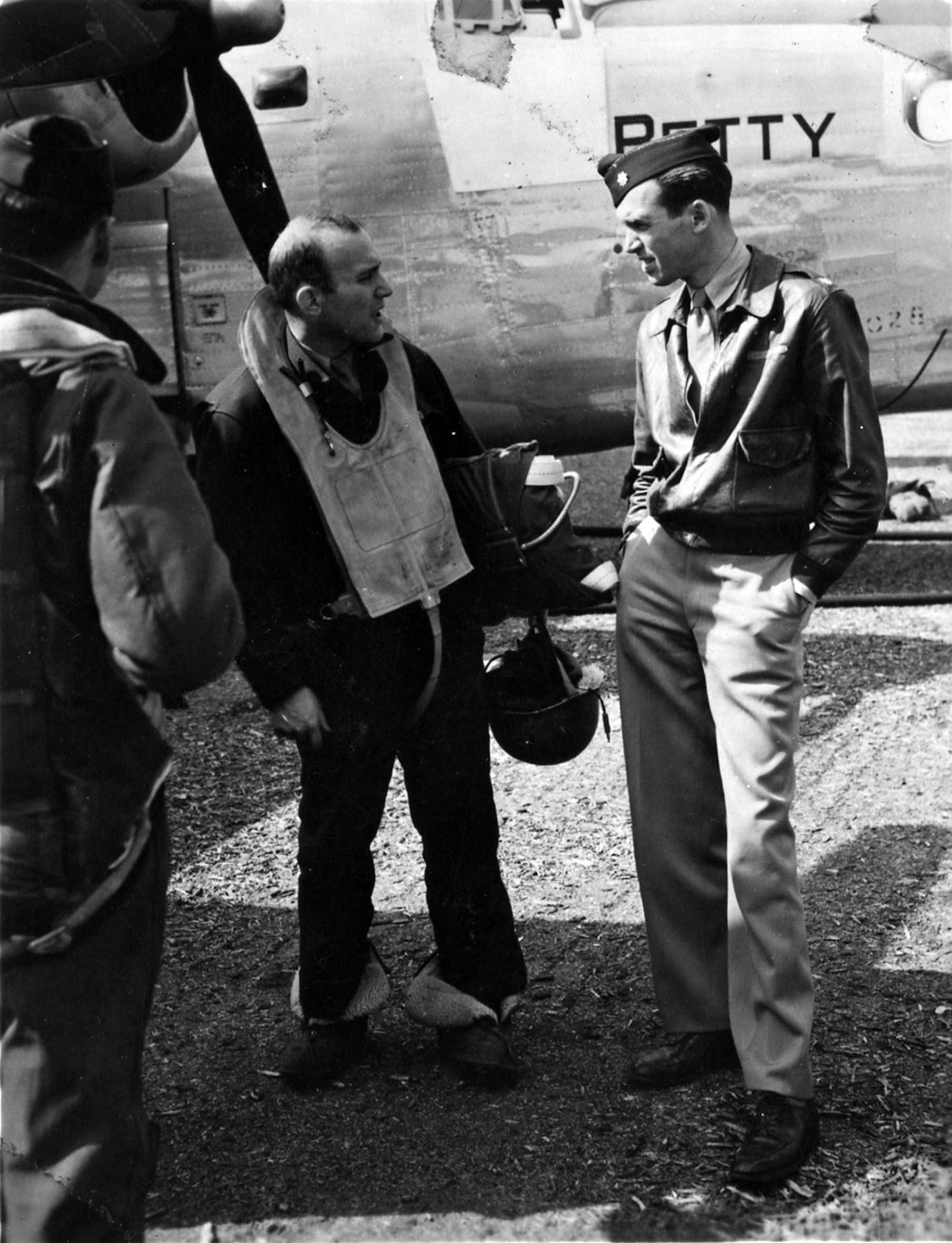
Did you ever wonder why Jimmy Stewart changed from this:


...to this?


Two things, really—World War II, and Anthony Mann.

Stewart saw his fair share of combat in WWII—more than his fair share, really. Initially drafted by the Army and rejected for being underweight (he was 6’ 3’’ and weighed only 143 pounds!), he hit the weights and re-enlisted in the Air Corps, just squeaking by. He entered the service as a private, but ended the war a full Colonel commanding the Army Air Force 2nd Bomb Wing. Although he was eventually promoted to staff officer and didn’t have to fly daily bombing missions, Stewart assigned himself as a combat crewman until promoted to Lieutenant Colonel in 1944.


In fact, after WWII Stewart was still an officer in the Air Force Reserve. In 1966, Brigadier General Stewart flew on a B-52 bombing mission during the Vietnam War.

It wasn’t apparent in his youth, but clearly James Stewart had some steel in his spine.

Like many GIs, Stewart returned from the grimness of combat a changed man. America had changed, too—it was ready for darker movie fare, with protagonists who had trouble in their past and conflicting, perhaps-not-completely-wholesome desires. Enter Anthony Mann, a director who was very much at home in this territory, and had by the early 1950s made a number of Film Noirs whose gritty protagonists dragged one foot in the criminal demimonde.

The combination of Mann and Stewart was electrifying, and audiences knew it. These are not your John Ford, straight-up-the-middle westerns, with John Wayne dispensing rough justice and sleeping soundly about it that night. In a Mann/Stewart western, justice is whatever you can defend with your gun—or your knife, or your bare hands. And you might have to break some eggs to get the job done. Things The Law isn’t going to like.

If you’re ready for a dark trail ride into the seamy underbelly of Manifest Destiny, give one of these a try:

The Man from Laramie (1955)


Monday, November 26, 2012

Vyer Films Online


 Hello, fellow IFS aficionados! I thought while we while away these long winter days, dreaming fondly of the darkened Muenzinger auditorium, we might avail ourselves of an exciting new online offering.
  Like our beloved IFS, Vyer films offers selections out of the mainstream. In their own words, "Hollywood makes movies for toddlers, tweens, and teenagers. We find and stream films for everyone else."
  They specialize in films previously unreleased in the US, something I imagine most IFS fans will find of particular interest.
  You can watch the first fifteen minutes of any film for free, then it's $7 for a "lifetime" rental.


Tuesday, November 20, 2012

Do We Need More Star Wars Movies?


As we hurtle helplessly towards Thanksgiving, my mind cannot help but turn to—Star Wars!


Ahem. Actually, I don’t remember most of that abomination, but I do remember the animated segments, which are quite good, in a late 70s Heavy Metal style.


However, I digress. Since George Lucas sold Lucasfilm to Walt Disney for just upwards of four billion dollars, Disney lost no time announcing that a new trilogy is in the works, and that Lucas is being retained as a creative consultant.

Of course, the question “do we need more of this franchise?” is moot, since Disney bought the company to continue flogging this dead, incredibly profitable horse—and flog it shall, with abandon! The question then becomes “will these be movies we want to go see?”

The Empire Strikes Back was just a Hell of a movie. It didn’t try to be a rehash of the first movie, and it was all the better for it. The pace was relentless and the dark tone was just the tonic for the overbearing sweetness of the first movie. It also (wisely) gave Luke the boot and let the two really exciting characters get together—Han and Leia.

After that, the franchise went downhill for me. The second trilogy was just a mess. So much so that I didn’t even bother seeing that Attack of the Clones sandwich filler.

Lucas is amazing at tapping into his nostalgia and turning those happy memories into movies. It was the clout he gained by making the highly profitable American Graffiti that allowed him to make Star Wars in the first place. He and Steven Spielberg then went on to repackage their love of old cliffhanger serials as Raiders of the Lost Ark.

Lucas’ technical skills are also highly developed. He founded Industrial Light & Magic to help with the production of Star Wars, and it has rightly become an 800-pound gorilla in the special effects industry.

His writing and directing skills are—let’s put it this way. Lucas wrote the original stories for all of the Star Wars films, but handed over the directorial and scriptwriting reins for The Empire Strikes Back. He started creeping back in Return of the Jedi, taking half the screenwriting credit with Lawrence Kasdan. He wrote the screenplays for and directed the entire second trilogy (except for Attack of the Clones, in which he shared screenwriting credit with Jonathan Hales).

Look into your heart. How did you feel about each of those films?

I’m not opposed to more Star Wars films on principle, but I won’t throw Disney my money if they can’t be bothered to make films worth seeing. If Disney wants to take the best ideas that Lucas has and wed them with good storytelling and inspired direction (is Joss Whedon doing anything these days?) then the franchise is on firm footing and will make shareholders happy for years to come.

If not, then good luck to ya, Disney. The fanboys will keep buying tickets (for a while), but not me.